There are eight wooden churches in Maramures on the UNESCO list and roughly ninety more that are not, and the ones that are not are frequently the better afternoon. The list is a filter written by people who cared about spires and joinery, not about whether anyone still walks through the door. Poienile Izei is on it. Rozavlea and Calinesti and Sarbi are not, and Sarbi has a water driven fulling mill in the same yard, still turning, run by a man whose grandfather ran it.
We put this trip in the three to five month bracket for one reason and it is not the flights. Reserve a trip to Maramures a season ahead and you get the guide, the four room house, and a September date instead of an October one. Come at six weeks and you will still go; you will simply go with different people and sleep somewhere with a parking lot.
The region sits in the far north, against the Ukrainian border, and it is genuinely awkward to reach, which is the entire reason it looks the way it does. Cluj is a three and a half hour drive over the Gutai pass. Baia Mare is closer at ninety minutes but has a thinner flight schedule. Neither is a hub, and both are why the valleys were left alone long enough for the hand mowing to survive into a decade that mostly gave it up.
- Notice
- Three to five months, the ordinary window
- How far ahead
- Three to five months, counted in months and not in weeks, because the constraint is beds and one person's calendar rather than any ticket.
- What has to be reserved first
- The guide is what runs out first. There are perhaps four people working these valleys who speak fluent English, know which households still cut by hand, and can walk into a courtyard in Botiza without it being an intrusion; the one we use takes reservations for the following summer from mid January onward and is generally full for June through September by the end of March. After that you are choosing between a guide who narrates and a guide who introduces, which is the whole difference in a place like this. Second to go are the four rooms at the Iza valley guesthouse we prefer, which is a working farm with four rooms and no more; when those are gone the fallback is a house in Vadu Izei with more rooms and less quiet, twenty minutes further from the churches, and the trip still works.
- Nights
- 6
- From
- $2,290 per person
- Shape of it
- guesthouse based, driver and guide
- What is in the figure
- Six nights in family run guesthouses with private bathrooms; breakfast and evening meal daily; a car and driver for all six days; an English speaking guide for four full days; entry to the wooden churches at Ieud, Barsana, Poienile Izei and Surdesti; a round trip on the Vaser valley forestry line; one afternoon with a household that still cuts hay by hand; airport transfers at Cluj or Baia Mare.
- What is not
- International and internal flights; lunches, which run $8 to $14 and are usually eaten at a table somebody sets for you; alcohol; the guide on the two free days, which can be added for $180 a day; tips for the driver, guide and households, which we will give you a plain figure for; anything you buy in the Sighet or Ocna Sugatag markets; a single room, which adds $310 across the six nights; any change of dates made inside forty days of arrival, which the guesthouses charge us for and we pass on at cost.
- Who it does not suit
- Anyone who wants to sleep in the same style of room each night, or who needs an elevator, since every guesthouse here is two stories with a wooden stair and no lift. Days involve two to four hours in a car on roads that are paved but narrow and slow, and the church visits mean standing on uneven stone and stepping over sills built high on purpose. If you are set on going in the second half of July or in August and you are asking us in May, we will tell you so rather than sell you the leftovers.
Two valleys, a pass, and roads that decide your day
The Iza and the Mara run roughly parallel, separated by a ridge, and almost everything worth six days sits along one or the other. The Iza is the longer of the two, running from Sacel down through Ieud, Botiza, Poienile Izei, Barsana and Vadu Izei to the Tisza plain at Sighetu Marmatiei. The Mara is shorter and steeper and holds Desesti, Harnicesti and the pass road up to Gutai at 3,320 feet, which is where the weather changes on you.
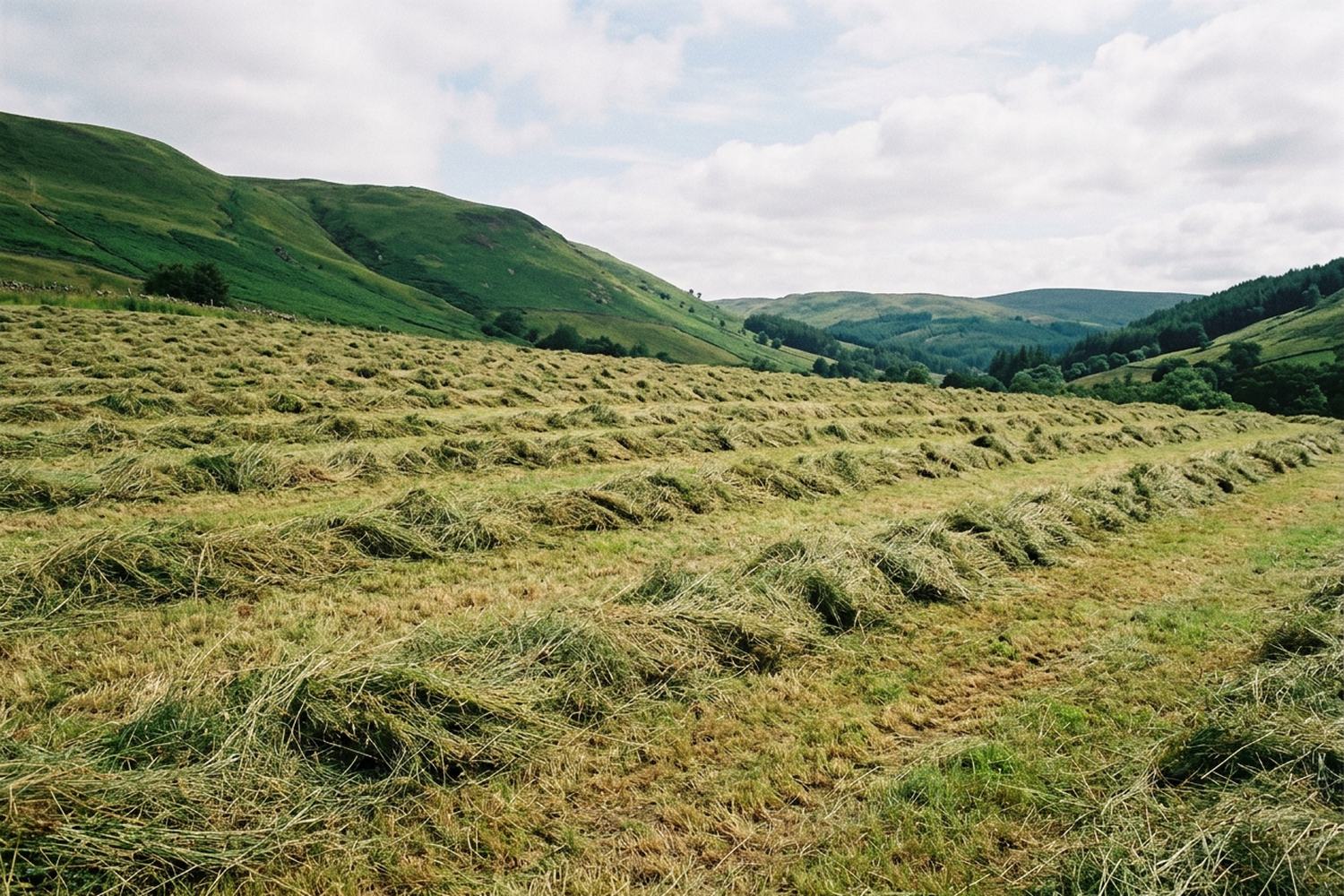
Ground level in the valleys is around 1,300 feet. Nothing on this trip is a climb. The walking is a mile here and two miles there, across pasture and along field tracks, and in June that pasture is being cut by hand with a scythe, in rows, by two or three people who start before six in the morning because the grass cuts better wet. The hay goes up on pointed stacks around a central pole, and you will see several hundred of them in a day. This is not a demonstration for visitors. It is how the winter feed gets made on holdings of two and four acres that no machine can economically work.
Roads are paved and narrow. Figure twenty five miles an hour is the honest average once you are past the Sighet road, less if you are behind a horse cart, and there are still a great many horse carts. The Gutai pass closes for snow clearing in winter and can be slow with fog in late September. Our driver knows which of the valley bridges are single lane and plans the day around not meeting a logging truck on one.
What opens when, and what has already gone by March
The calendar here is set by three separate things that do not coordinate with each other: one person's reservation diary, a handful of small houses with fixed room counts, and a narrow gauge railway that runs a public schedule from roughly May through October and adds departures only when it has the crews.
The guide takes the following season's dates from mid January. The Iza guesthouse takes them from February, by telephone, in Romanian, which is why you are talking to us. The forestry line at Viseu de Sus publishes its timetable in March for the season, and the useful thing to know is that the mid morning departure sells out first and the later one is usually available, which changes the shape of your day but not much else.
- Mid January
- The guide's diary opens for the following May through October
- End of March
- June, July and September dates with that guide are typically spoken for
- Early April
- The four room Iza guesthouse is full across the hay weeks in June
- Mid May
- The mid morning Vaser departures are gone on most Saturdays through August
- Six weeks out
- You are choosing among houses in Vadu Izei and Sighet, with a guide who narrates rather than one who introduces
- Under three weeks
- We will look, and in April, May or late October we will often find something worth doing
From your first message to a confirmed set of six nights
Nothing is held while we talk. What we do first is check the two constraints that actually bind, the guide and the room, before we discuss anything else, because if those are gone in your week the honest answer is a different week. That check takes a day or two, since it involves telephoning people who are outdoors.
- First messageanswered within the working day. We ask for your month, how firm the dates are, and whether you would move a week to keep the guide
- Two to four working daysYou get a written figure with the houses named by village, the days the guide is on, and what the two free days would look like
- On your wordWe hold the rooms and the guide's days, take a deposit, and send you the flight windows that make the Cluj drive land in daylight
- Four weeks outFinal paperwork, the driver's name and number, the Vaser departure time, and the household visit fixed to a day when they are actually cutting
Say the difficult part first
If your dates are already fixed and cannot move, say so in the first line, and say which month. That single sentence tells us in about ten minutes whether this trip is worth building for you or whether we should be talking about a different valley entirely.