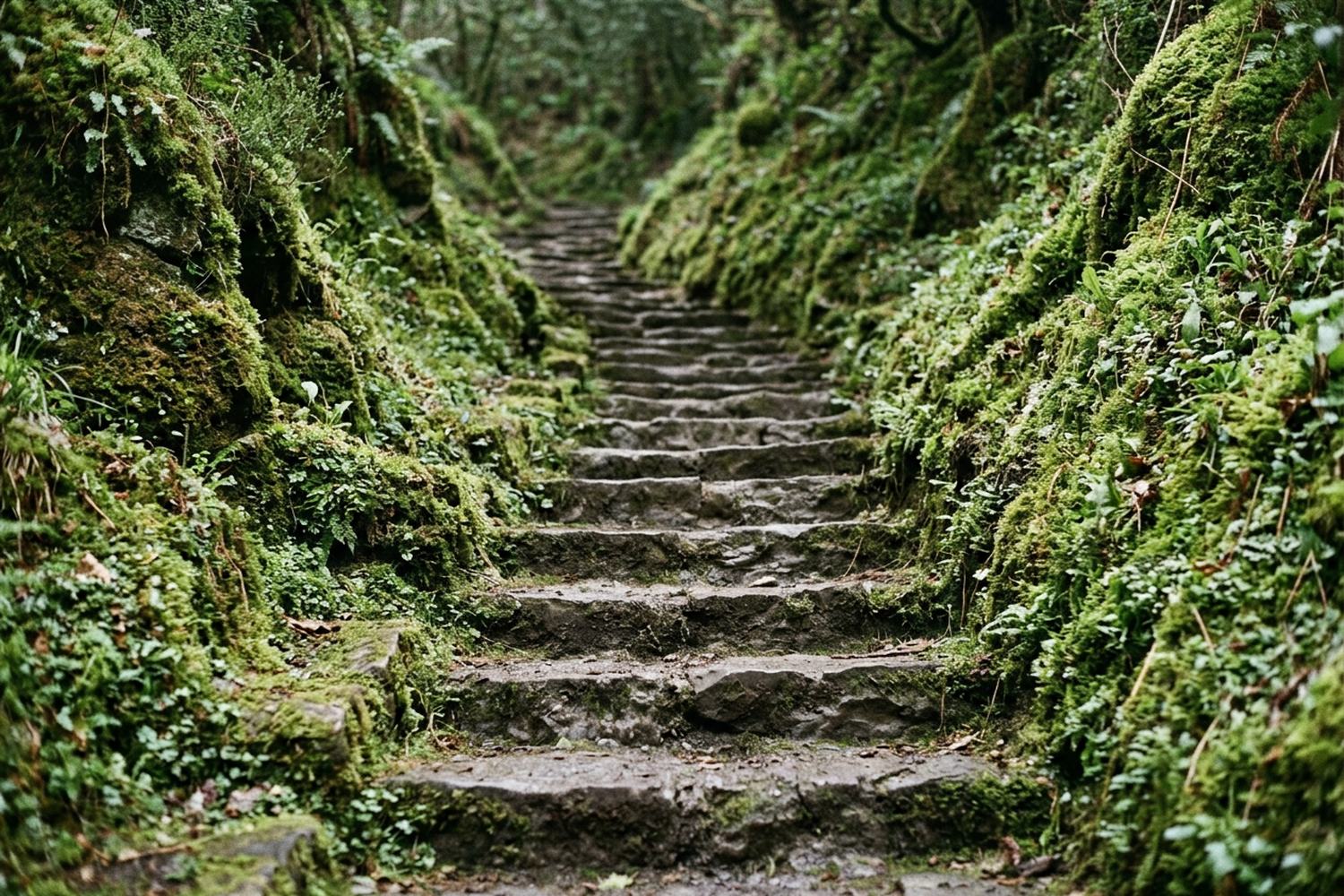
The stone steps on the Nakahechi section were cut for people carrying loads, which means they are shallow, uneven and much older than any staircase you have climbed at home. There are around four thousand of them between Takahara and Hongu, spread over three days, and they are wet more often than they are dry. Wakayama takes roughly one hundred inches of rain a year on the mountain side, and the cedar overhead keeps the steps damp for two days after the sky clears.
You reserve the Kumano Kodo two winters ahead because the road is not the constraint. The road is public, free, open and unbookable. The constraint is that the villages along it are small, that the inns in them have six or eight rooms and one family running them, and that the people who run them decide their whole year on one morning and then stop taking calls.
Eight nights, six of them walking. Bags go ahead by van each morning and are in your room by four in the afternoon. You walk with a day pack and buy lunch where you can, which on two of the days means buying it the night before because there is nothing open on the trail.
- Notice
- Eighteen months or more, the book opens once
- How far ahead
- Eighteen to twenty four months, counted back from the day the inns release the walking season, not from your departure date.
- What has to be reserved first
- The bottleneck is a single night: the inn at the top of the pass on the Nakahechi section between Chikatsuyu and Hongu, where the whole village sleeps twenty two people across three houses and one of those houses is the only one within four miles of the trail. Those books open on the first working morning of the same month one year before the season, in one batch, for the entire year, and the March through May nights and the October through November nights are gone inside about seventy two hours. What is left after the first week is midweek in late June, in July and in August, when the daytime highs on the coast side run in the low nineties Fahrenheit with humidity to match and the stone steps hold the heat until dark. The fallback, and it is a real one rather than a consolation, is to sleep at the bottom of the pass and ride the valley bus up to the trail head at seven forty in the morning, which costs you an hour and about six hundred feet of ascent you would otherwise have walked, and which we book as the default when the top night is unavailable.
- Nights
- 8
- From
- $3,980 per person
- Shape of it
- inn to inn on foot, bags moved ahead
- What is in the figure
- Eight nights in family run inns, twin or double occupancy; eight breakfasts and seven evening meals at the inns, served at a set hour; bag transfer between inns on all six walking days, one piece per person up to forty four pounds; local bus and rail segments named in your itinerary, including the valley connection to the trail head; a printed day by day sheet with distances, ascent, water points and the last bus each afternoon; the transfer from the nearest rail station on arrival day and back on departure day; one written contingency plan for closure or heavy rain, arranged before you fly.
- What is not
- International and domestic air; anything you eat or drink away from the inns, including all seven lunches, which you buy in the villages or carry; the two evening meals on the nights the inns do not serve, where you eat in the village; entry fees at museums or bathhouses; taxis you take on your own account, including the pass road taxi if you decide against the bus; laundry, which most inns charge by the load; any second bag or any bag over forty four pounds, which the transfer service will refuse at the counter; luggage stored at the coast while you walk; tips, which are not expected anywhere on this road; medical costs, and anything a travel protection product would ordinarily be sold to cover, which Birchway Point does not sell and does not advise on.
- Who it does not suit
- Anyone who cannot commit to dates roughly two years out and hold them, since the bottleneck night is not transferable and not refundable inside ninety days. Anyone unwilling to walk eight to fourteen miles a day on wet stone steps, six days running, with 2,300 feet of ascent on the longest day and no road access for stretches of four miles. Anyone who needs a private bath, a western bed or a flexible dinner hour every night, because four of these inns have none of those. Anyone traveling with a bag over forty four pounds or with more than one bag per person.
What the ground actually does under your feet
The Nakahechi runs west to east across the Kii Peninsula, from Takijiri at the edge of the flat country up over two passes and down into the Hongu valley, then south by water and road to the coast at Nachi. Our version walks the middle of it. Daily distances run between eight and fourteen miles. The longest day, Chikatsuyu to Hongu, is about fourteen and a half miles with roughly 2,300 feet of cumulative ascent and the same coming back down, and it takes most people between seven and nine hours including stops.
Surfaces change every twenty minutes. Cut stone, packed earth, exposed cedar roots, forty minute stretches of paved single lane road with a white line and no shoulder, and then stone again. There are sections where a fall would be onto rock rather than onto dirt, and sections where the trail runs a few feet from a drop with a rope handline and no fence. Cell coverage on the two passes is patchy and the trail markers are numbered posts about every three hundred yards.
The weather deserves a number rather than an adjective. Late March into May: daytime highs in the sixties, nights near forty, rain about one day in three. June: the rain front, twelve to eighteen inches in the month, and the steps run like a creek bed. July and August: highs in the low nineties with heavy humidity, and the standing advice from the inns themselves is to be walking by six in the morning. Late October into November: the best walking of the year, highs in the sixties, low rainfall, and the section booked out fifteen months in advance for exactly that reason.
The one morning that decides your year
The inns on this road do not run rolling availability. Each house opens its book for the following year in a single batch, and on the middle section the convention has settled on the first working morning of the matching month twelve months out. The house at the top of the pass takes twelve of the twenty two beds in that village. When those twelve go, the village is full, and the next place with a bed is four miles further on, past the point where the last afternoon bus has already left.
This is why the unit of notice here is seasons rather than weeks. To hold an October night, we need your dates by roughly the previous August so that we are ready on the release morning fourteen months before you fly. Come to us in the spring for the following autumn and we are booking your fallback, not your first choice.
- Eighteen to twenty four months out
- dates fixed with you, deposit taken, release morning marked
- Twelve months out, release morning
- the pass night is requested in the first batch; spring and autumn beds go inside about seventy two hours
- Nine months out
- remaining spring and autumn nights on the middle section are gone; midweek summer still open
- Six months out
- the valley inns below the pass are full for weekends; the bus fallback becomes the working plan
- Ninety days out
- the pass night stops being refundable or transferable; bag transfer slots for the season close
- Thirty days out
- rail seat reservations open and are booked for you; itinerary sheet finalized
From your first message to a confirmed set of beds
Nothing is charged while we are checking. We read a message the same working day, and a written figure with the dates, the inns by village, the daily distances and the total a number against your dates takes two to four working days, because the inns answer by fax and by phone in their own time and two of them answer once a week.
- First messageyou name a month and a rough week; we tell you what the release calendar looks like for that season and whether the pass night is realistic
- Written figuretwo to four working days: villages, distances, ascent, meal arrangements, transfers and the total per person, with the fallback night priced alongside
- Deposit and holddates locked, release morning entered; we submit on the opening morning and tell you within a day which beds we hold
- Final papersthirty days out: rail seats, bag transfer slots, arrival transfer time and the printed day sheet
Ask us what is actually open
Tell us the month you are thinking about and whether you would rather sleep at the top of the pass or take the morning bus up. Those two answers decide most of the itinerary, and we can tell you today which of them is still available for which season.